

As the swimming season winds down, the question of what to do with the pool comes up. Leaving it unattended during the colder months can lead to problems that take time and money to fix in the spring. A little preparation before the temperature drops makes the reopening process much smoother.
This article covers the basics of off-season pool care, what needs to be done before the cold weather arrives, and what still matters while the pool is not in use.
The Goals of Off-Season Care
When the pool is not being used regularly, the approach to maintenance changes. The priorities shift from keeping the water swim-ready to protecting the equipment and preventing major issues from developing.
Preventing Freeze Damage
Water expands when it freezes. In a pool, this can damage pipes, the pump, the filter, and the heater if water is left trapped inside. Draining water from the equipment and adding winterizing chemicals helps protect these components.
For pools in regions where freezing temperatures are common, a few hours of preparation in the fall can prevent hundreds of dollars in repairs later.
Keeping Algae from Taking Over
Without regular sanitizer additions and circulation, algae can grow even in cool water. A pool that goes into winter uncleaned may be green by spring. A proper closing routine with the right chemical treatment prevents this.
Reducing Spring Cleaning Effort
A pool that is closed properly requires much less work when it opens again. The water stays clearer, the equipment starts up without issues, and the first few weeks of the season are spent swimming rather than cleaning.
What to Do Before Closing the Pool
The closing process does not need to be complicated, but the order of operations matters.
Deep Clean the Pool
Start with a thorough cleaning. Skim the surface, vacuum the floor and walls, and brush the tile. Remove as much organic material as possible. Debris left in the pool over the winter breaks down and creates problems that are harder to address later.
Balance the Water Chemistry
Adjust the water chemistry before adding winterizing chemicals. Test and balance the pH, alkalinity, and calcium hardness. Then add a winterizing algaecide and a sanitizer boost.
Balanced water stays stable longer during the off-season. Unbalanced water can become corrosive or scale-forming over several months.
Lower the Water Level
Drain the water to below the skimmer opening, following the manufacturer’s recommendation for your specific pool type. This prevents water from freezing in the skimmer and return lines.
Drain and Store Equipment
Drain the pump, filter, and heater according to the manufacturer’s instructions. Remove drain plugs and store them where they will not be lost. Blow out the return lines with a shop vacuum or compressor to remove standing water.
Install a Pool Cover
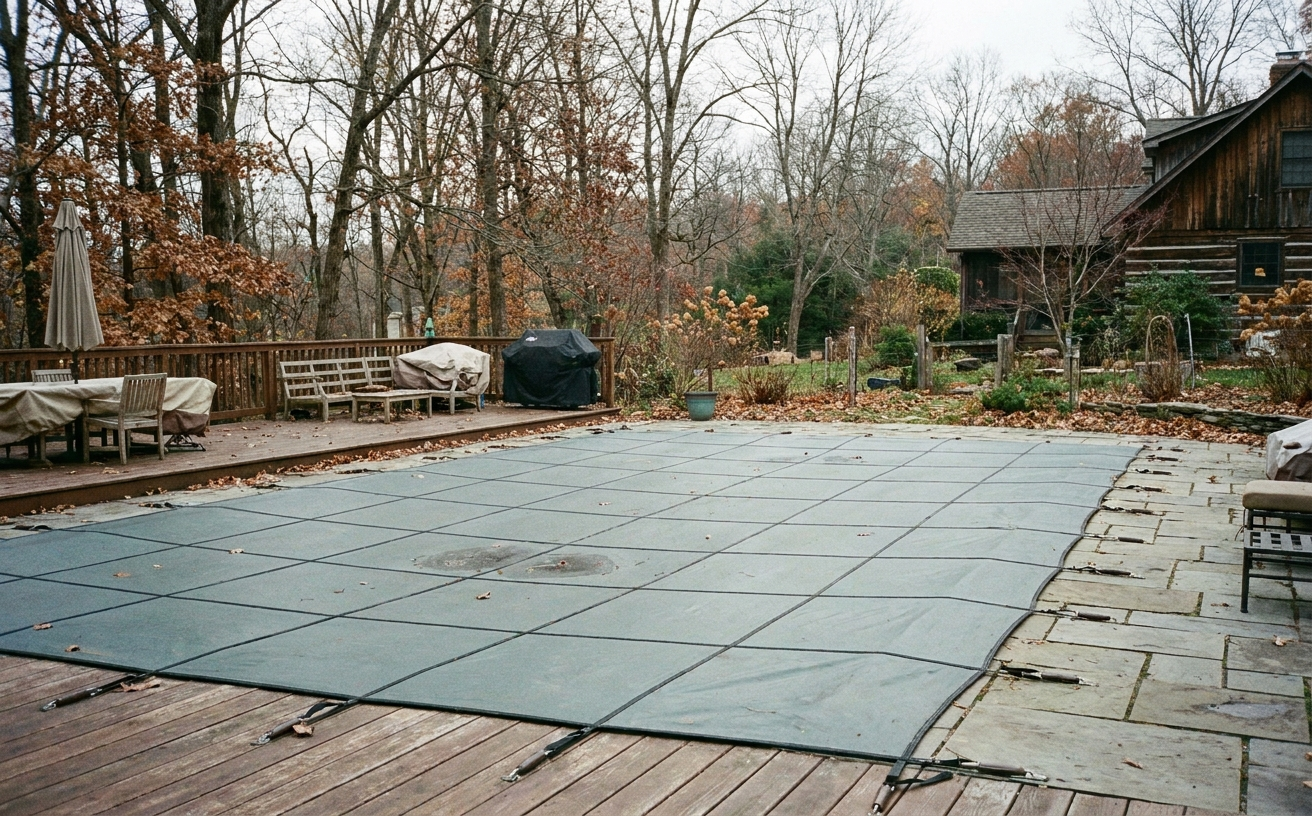
A winter cover keeps out leaves, dirt, and wildlife. It also reduces sunlight penetration, which helps prevent algae growth. Secure the cover properly with water bags or anchors so it stays in place through wind and storms.
Solid covers block sunlight more effectively but may collect rainwater. Mesh covers allow water to drain through but let in more light and fine debris. The choice depends on your pool type and local conditions.
What Still Matters During the Off-Season
A closed pool does not require weekly attention, but a few checks are worth doing.
Check the Cover Periodically
After heavy rain or snow, check that the cover has not collected too much water. Excess weight can damage the cover or pull it loose. Use a cover pump to remove standing water if needed.
Inspect the Equipment
If the equipment is stored outdoors but not fully protected, check it after major storms to make sure covers have not blown off and drain plugs are still in place.
Monitor the Water Level
If the pool loses water over the winter, the cover may sag or the liner may be exposed to air. Adding a small amount of water once or twice during the off-season prevents this.
Spring Opening Overview
When warm weather returns, the opening process is the reverse of closing.
Remove the cover and clean it before storing. Refill the water to the correct level. Reconnect and prime the equipment. Test the water and adjust the chemistry. Run the filter for 24 to 48 hours to clear any cloudiness.
Most pools open smoothly if they were closed properly. A robotic pool cleaner can speed up the spring cleaning process, running daily to pick up any debris that settled during the off-season or found its way in when the cover was removed.
Wrapping Up
Taking the time to close the pool properly saves effort and expense in the long run. The steps are straightforward, and the payoff is a pool that opens clean and clear when the warm weather returns.
