


Understanding words deeply helps us communicate more clearly and effectively. One such powerful and expressive word in the English language is “evoke.” People often search for the evoke definition to understand what it truly means and how it can be used in daily conversations, writing, and storytelling.
In this detailed guide, we will explore the evoke definition, its meanings, origins, usage, synonyms, examples, and real-life applications. By the end of this article, you will have a complete understanding of how and when to use the word evoke correctly.
What Is the Evoke Definition?
The evoke definition refers to the act of bringing something into the mind or memory. When you evoke something, you cause a feeling, image, memory, or idea to appear in someone’s thoughts.
Simple Definition:
👉 To evoke means to bring a feeling, memory, or image into someone’s mind.
Example:
- The old song evoked memories of her childhood.
- The smell of fresh bread evoked a sense of comfort and warmth.
In both examples, evoke means to cause a memory or feeling to arise naturally.
Evoke Definition in Simple Words
For beginners or non-native English speakers, the evoke definition can be simplified even further.
In simple words:
👉 Evoke means to make someone remember or feel something.
For example:
- A movie can evoke happiness.
- A story can evoke sadness.
- A photograph can evoke memories.
So whenever something brings back a memory, emotion, or idea, you can say it evokes that feeling.
Origin and History of the Word “Evoke”
Understanding the origin of a word often helps clarify its deeper meaning.
The word evoke comes from the Latin word evocare, which means:
- “to call out”
- “to summon”
- “to bring forth”
Over time, this meaning evolved into the modern evoke definition, which focuses more on calling up emotions, memories, or ideas rather than physically calling someone.
Evoke Definition in Psychology
In psychology, the evoke definition is commonly used when talking about emotional or mental responses.
For example:
- Certain sounds can evoke fear.
- Certain colors can evoke calmness.
- Certain words can evoke motivation.
Psychologists study how different stimuli evoke emotions or memories in people. This concept is widely used in therapy, advertising, and branding.
Evoke Definition in Literature and Writing
Writers and poets frequently use the concept of evoking emotions to make their work more powerful.
The evoke definition in writing means:
👉 To create strong images or emotions in the reader’s mind.
For example:
- A well-written scene can evoke sadness.
- A poetic line can evoke love or nostalgia.
- A descriptive paragraph can evoke fear or excitement.
Good writers don’t just tell stories; they evoke emotions through words.
Common Examples That Explain the Evoke Definition
Here are some practical examples that clearly show the evoke definition in real life:
- The photograph evoked memories of our vacation.
- His speech evoked strong emotions among the audience.
- The scent of coffee evoked a sense of comfort.
- The novel evoked feelings of hope and courage.
- Her smile evoked happiness in everyone around her.
Each sentence shows how evoke means to bring a feeling or memory into someone’s mind.
Evoke Definition vs Similar Words
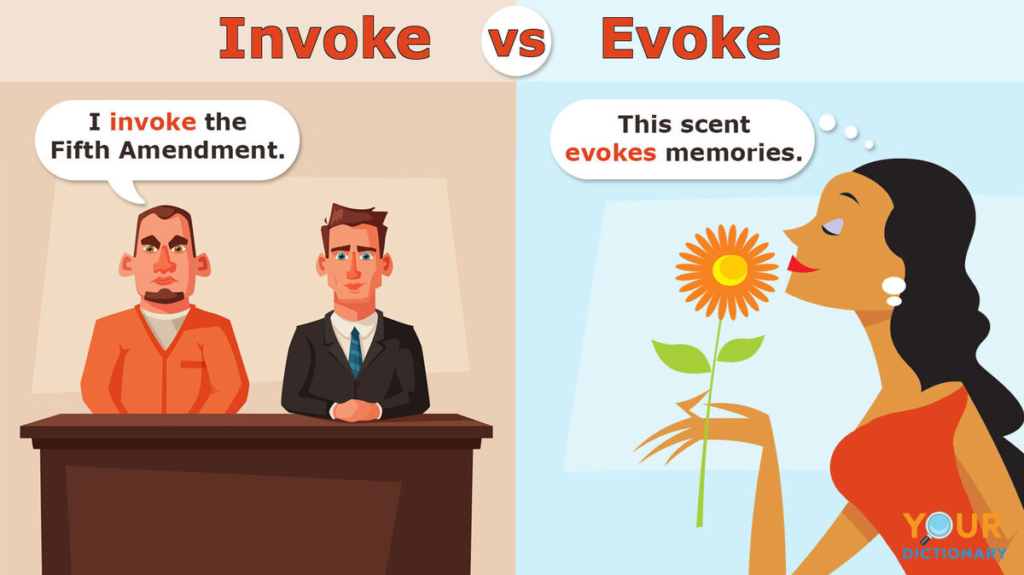
Many people confuse evoke with similar words like invoke, provoke, and elicit. Let’s clarify the differences.
1. Evoke vs Invoke
- Evoke: To bring a memory or feeling into the mind.
- Invoke: To call upon something formally, such as a law or authority.
Example:
- The story evoked sadness.
- The lawyer invoked the law.
2. Evoke vs Provoke
- Evoke: Natural emotional response.
- Provoke: Deliberate action to cause a reaction, often negative.
Example:
- The music evoked joy.
- His rude comment provoked anger.
3. Evoke vs Elicit
- Evoke: To cause a memory or feeling.
- Elicit: To draw out a response or answer.
Example:
- The painting evoked emotions.
- The teacher elicited answers from students.
Why the Evoke Definition Matters in Daily Life
Understanding the evoke definition helps improve communication in many ways:
- Better emotional expression
- Stronger storytelling
- More effective marketing
- Clearer writing
- Deeper conversations
When you know how to use evoke, your language becomes more expressive and impactful.
Evoke Definition in Marketing and Advertising
Marketers use the concept of evoking emotions to influence buying decisions.
For example:
- A commercial may evoke happiness by showing a smiling family.
- A charity ad may evoke sympathy by showing emotional stories.
- A luxury brand may evoke prestige and elegance.
In marketing, emotions sell. That’s why the evoke definition plays a key role in branding and advertising.
How Music, Smells, and Images Evoke Emotions
The human brain strongly connects senses with memories.
- Music can evoke nostalgia.
- Smells can evoke childhood memories.
- Images can evoke fear or joy.
This explains why a single song or smell can suddenly transport you back to a specific moment in your life.
Evoke Definition in Education
Teachers often aim to evoke curiosity and interest.
For example:
- A science experiment can evoke excitement.
- A historical story can evoke empathy.
- A creative activity can evoke imagination.
Understanding how to evoke interest helps teachers make learning more engaging.
Using Evoke in a Sentence (Practice Section)
Here are some simple sentences you can practice with:
- The sunset evoked peace in my heart.
- His words evoked hope during hard times.
- The movie evoked tears from the audience.
- The aroma of tea evoked memories of home.
- Her artwork evoked admiration.
Common Mistakes When Using Evoke
Here are a few common mistakes:
❌ Incorrect:
- The teacher evoked the student to answer.
✅ Correct:
- The teacher elicited an answer from the student.
❌ Incorrect:
- He evoked the rules during the meeting.
✅ Correct:
- He invoked the rules during the meeting.
Evoke Definition in Emotional Intelligence
People with high emotional intelligence understand how words and actions evoke feelings in others.
- A kind word can evoke happiness.
- A harsh tone can evoke fear.
- Encouragement can evoke confidence.
Being mindful of how you evoke emotions improves relationships and communication.
Cultural Differences in What Evokes Emotions
Different cultures respond differently to symbols, words, and images.
- Colors evoke different emotions across cultures.
- Gestures evoke different meanings.
- Music evokes different moods.
So the evoke definition also depends on cultural context.
Evoke Definition in Art and Creativity
Artists aim to evoke emotional responses.
- A painting may evoke sadness.
- A sculpture may evoke awe.
- A song may evoke love.
Art becomes meaningful when it evokes something inside the viewer.
Final Thoughts on Evoke Definition
The evoke definition is simple yet powerful. It means bringing emotions, memories, or ideas into someone’s mind. Whether in writing, speaking, marketing, or daily life, understanding how to evoke feelings makes communication richer and more meaningful.
Key Takeaways:
- Evoke means to bring forth emotions or memories.
- It is commonly used in writing, psychology, marketing, and daily speech.
- It helps express emotional depth and connection.
FAQs About Evoke Definition
What is the simple evoke definition?
Evoke means to make someone remember or feel something.
Is evoke a positive or negative word?
It can be both. You can evoke happiness or evoke sadness.
Can a person evoke emotions?
Yes. A person’s words, actions, or presence can evoke emotions.
Is evoke formal or informal?
It is a neutral word suitable for both formal and informal contexts.
Conclusion
Now you fully understand the evoke definition and how it works in real life. From emotions and memories to writing and marketing, evoke is a powerful word that helps describe how feelings and ideas are brought to life.
