

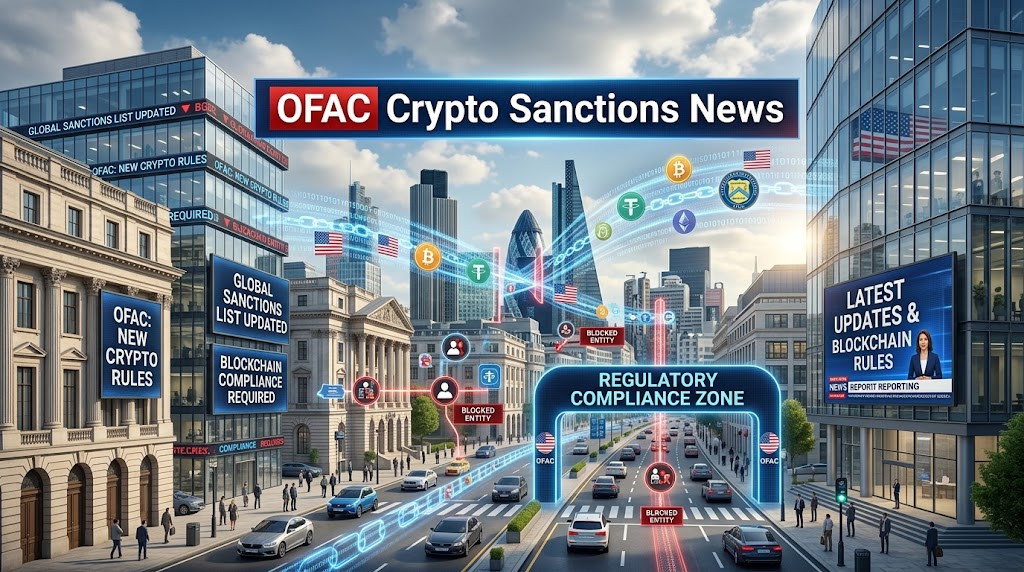
Have you ever wondered how governments keep track of digital money sent across the world? OFAC Crypto Sanctions News In recent years, digital coins like Bitcoin have become very popular. But because they are fast and borderless, some people try to use them to break the law. That is where a special office in the United States government steps in to protect the financial system.
The office is called the Office of Foreign Assets Control, or OFAC for short. When people look for ofac crypto sanctions news, they want to know how rules are changing for digital assets. Governments want to stop bad actors, hackers, and dangerous groups from moving hidden funds. Understanding these updates helps everyone keep the digital currency ecosystem safe, legal, and open for honest everyday users.
What Is OFAC and Why Does It Matter?
OFAC is a powerful branch of the U.S. Department of the Treasury. Its main job is to administer and enforce economic and trade sanctions. Think of it like a global traffic cop for money. When a country, group, or person threatens national security, OFAC puts them on a special restricted list.
This is known as the Specially Designated Nationals (SDN) List. In the past, this list only tracked physical cash, bank accounts, and gold. Today, tracking ofac crypto sanctions news shows that digital wallet addresses are added to this list regularly. If a crypto address is on the SDN list, nobody in the United States is allowed to send funds to it or receive funds from it.
How Blockchain Tracking Makes Rules Work
Many people think digital coins are totally anonymous, but that is a common myth. Most public networks, like Bitcoin and Ethereum, act like a giant public digital ledger. Every single transaction is recorded forever for anyone to view.
Law enforcement agencies and blockchain analytics firms use smart tools to trace these transactions. When reading ofac crypto sanctions news, you will often see how investigators follow digital breadcrumbs. They can track a coin from a hacker’s wallet all the way to an online exchange. This transparent technology actually makes it easier for authorities to spot illegal money trails than it is with physical paper cash hidden in suitcases.
Recent Updates on Digital Asset Sanctions
The rules for digital assets change quickly as technology evolves. Governments are updating old laws to fit modern tech platforms. Recent ofac crypto sanctions news highlights major actions against unauthorized digital asset exchanges, crypto mixing services, and overseas cybercrime groups.
For example, authorities frequently target platforms that help bad actors hide their digital cash. By blocking these specific hubs, regulators cut off the financial oxygen that illegal groups rely on. These actions send a clear message to the entire tech community that digital coins cannot be used to escape global laws.
The Role of Stablecoins in Modern Enforcement
A very interesting trend in recent ofac crypto sanctions news involves stablecoins. Stablecoins are digital tokens whose value is tied to regular fiat money, like the U.S. dollar. Because they offer fast transfers without price swings, bad actors sometimes try to use them.
However, unlike standard decentralized coins, most major stablecoins are managed by central private companies. This means token issuers can freeze suspicious accounts instantly when law enforcement asks them to. Recent enforcement actions show that millions of dollars in frozen stablecoins can be locked down within hours, stopping illegal transactions dead in their tracks.
Why Crypto Exchanges Must Follow Compliance Laws
Digital currency trading platforms play a huge role in stopping financial crimes. Platforms that let users buy or sell digital coins must follow strict “Know Your Customer” (KYC) and Anti-Money Laundering (AML) laws.
When monitoring ofac crypto sanctions news, compliance officers at these trading platforms check user names and wallet addresses against government blocklists. If an exchange fails to screen its users properly, it can face massive fines or get shut down entirely. Good compliance protects both the trading platform and everyday users from getting mixed up in illegal finance.
Understanding the Specially Designated Nationals (SDN) List
The SDN list is the primary tool used in modern financial enforcement. When you check daily ofac crypto sanctions news, new entries usually point to fresh additions on this registry. These entries now include specific letters and numbers representing blockchain addresses across various networks.
Once an address is added, smart software flags it instantly. Wallet providers, payment processors, and decentralized finance apps use these updates to block transactions automatically. This creates a digital shield that prevents restricted funds from entering the mainstream market.
Real-World Impact on Everyday Crypto Users
You might wonder if these strict global rules affect regular people who just want to trade digital coins. For the average user, the impact is mostly behind the scenes. Legitimate wallets and mainstream trading apps handle the screening automatically.
However, staying informed about ofac crypto sanctions news helps you stay safe. For instance, if you accidentally interact with a contaminated wallet or a banned decentralized finance protocol, your funds could get temporarily frozen while compliance teams check them out. Knowing which platforms are safe ensures your digital assets remain secure and accessible.
The Future of Global Financial Security
Technology is always moving forward, and regulators are working hard to keep pace. As new financial tools emerge, global agencies will continue updating their enforcement strategies. Future ofac crypto sanctions news will likely feature more cooperation between tech companies, blockchain analysts, and international governments.
The ultimate goal of these rules is not to destroy innovation, but to build a trusted environment. By weeding out illegal activity, the digital asset space can grow into a safer, more transparent financial system that everyone can trust and use comfortably.
Complete Detailing Table
| Category | Key Detail | Description & Impact |
| Primary Regulatory Body | OFAC (Office of Foreign Assets Control) | A division of the U.S. Treasury enforcing economic rules and asset blocks. |
| Core Enforcement Tool | SDN List (Specially Designated Nationals) | A registry containing banned individuals, entities, and specific blockchain wallet addresses. |
| Primary Target Assets | Cryptocurrencies & Stablecoins | Includes Bitcoin, Ethereum, and dollar-pegged tokens utilized in illicit transfer attempts. |
| Enforcement Mechanism | On-Chain Analysis & Freezes | Public ledger tracing combined with issuer cooperation to lock suspicious funds quickly. |
| Industry Responsibility | KYC/AML Compliance | Mandatory screening protocols used by digital asset exchanges to stop blocked users. |
Frequently Asked Questions
What does OFAC mean in the cryptocurrency space?
OFAC stands for the Office of Foreign Assets Control. In the crypto space, it tracks and bans digital wallet addresses linked to illegal activities, hackers, or sanctioned nations to protect the global financial system.
Are all digital coins completely anonymous?
No. Most popular blockchains, like Bitcoin and Ethereum, are public ledgers. Every transaction is permanently recorded, making it possible for analytics tools and law enforcement to trace money trails.
How do sanctions affect regular crypto holders?
For honest users, the impact is minimal because legal platforms handle compliance screening automatically. However, knowing the rules helps you avoid shady platforms or unverified peer-to-peer transfers.
Can a crypto exchange freeze my funds due to sanctions?
Yes. If an exchange detects that your wallet has direct links to a restricted address or violates compliance rules, they can freeze the funds to investigate and comply with federal laws.
What is the SDN list in simple terms?
The SDN list is a public government registry of banned people, organizations, and digital wallet addresses that Americans and U.S. businesses are forbidden from doing business with.
Why are stablecoins targeted in recent updates?
Stablecoins have a fixed value tied to regular currency and are often managed by centralized issuers. This allows authorities to freeze tokens instantly on-chain when illicit activity is discovered.
