

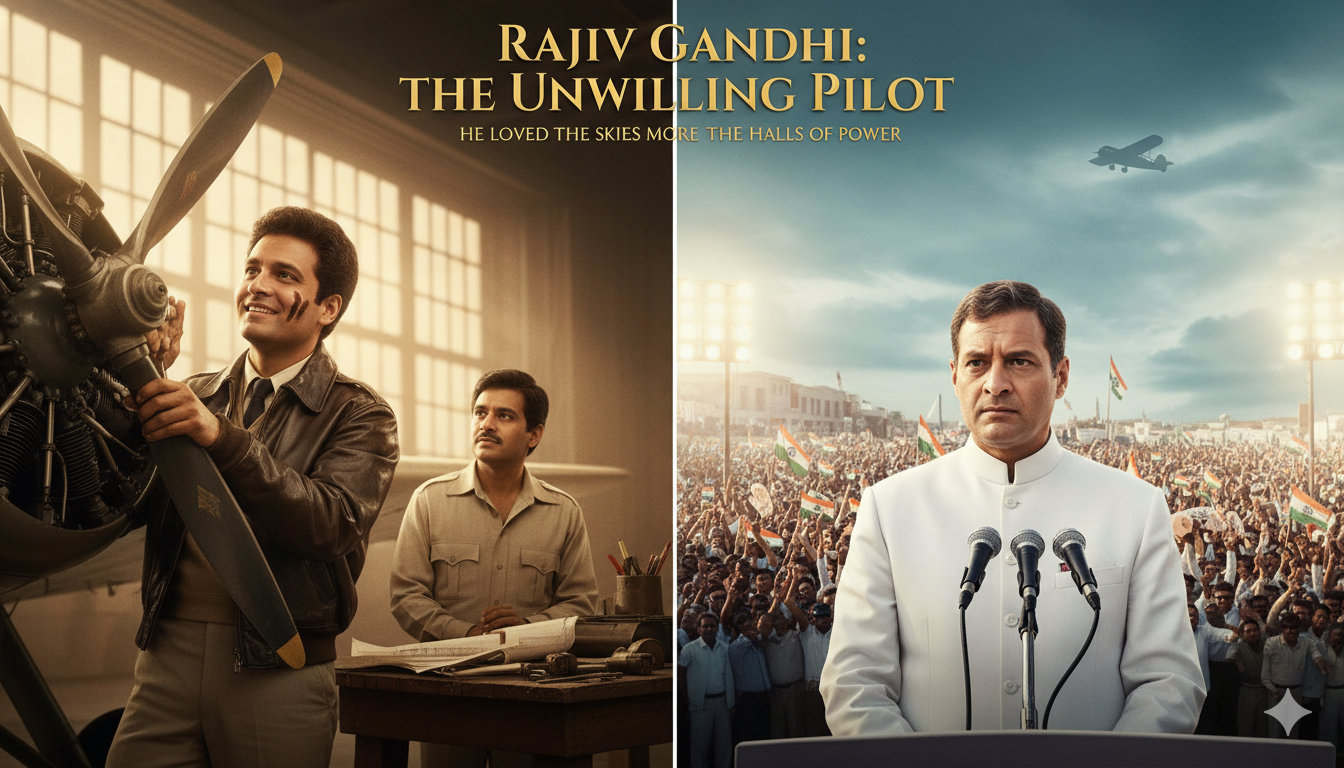
Rajiv Gandhi was a man who never really wanted to be in the spotlight. Born into India’s most famous political family, he spent his early years loving the skies more than the halls of power. As the grandson of Jawaharlal Nehru and the son of Indira Gandhi, politics was in his blood, but his heart was in the cockpit of an airplane. He worked as a professional pilot, enjoying a quiet life with his wife, Sonia, and their children. However, fate had a different plan for him. After the sudden death of his brother, Sanjay, and later the tragic loss of his mother, he stepped up to lead.
At just 40 years old, Rajiv Gandhi became the youngest Prime Minister India had ever seen. He was a breath of fresh air, bringing a modern vision to a country standing on the edge of a new century. He believed deeply in the power of technology and computers. Many people call him the “Father of Information Technology” in India because he laid the groundwork for the digital world we live in today. Even though he faced many challenges, his goal was always to make India a global leader.
Detailed Biography of Rajiv Gandhi
To understand the man behind the title, let’s look at the key facts of his life. He was a leader who moved fast and dreamed big.
| Feature | Details |
| Full Name | Rajiv Ratna Gandhi |
| Date of Birth | August 20, 1944 |
| Place of Birth | Mumbai, India |
| Profession | Commercial Pilot, Politician |
| Prime Minister Term | 1984 – 1989 |
| Political Party | Indian National Congress |
| Spouse | Sonia Gandhi |
| Children | Rahul Gandhi and Priyanka Gandhi Vadra |
| Major Award | Bharat Ratna (Posthumous, 1991) |
The Shocking Rajiv Gandhi Assassination
The story of his life took a dark turn on May 21, 1991. The Rajiv Gandhi assassination is one of the most tragic events in Indian history. While he was campaigning for the upcoming elections in a town called Sriperumbudur in Tamil Nadu, a woman approached him. She looked like a regular supporter coming to greet him with a garland. However, she was wearing a hidden vest filled with explosives. As she bent down to touch his feet, she triggered the bomb, killing Rajiv Gandhi and many others nearby.
This event shook the entire world. It wasn’t just the loss of a leader; it was a violent attack on the democratic process of India. The nation went into deep mourning as news of the Rajiv Gandhi death spread across television screens. People couldn’t believe that a man who worked so hard for peace and progress could be taken away in such a cruel manner. The site of the blast is now a memorial where people go to pay their respects and remember his contribution to the country.
Who Killed Rajiv Gandhi and Why?
After the tragedy, a massive investigation began to find out who killed Rajiv Gandhi. The investigators discovered a complex plot involving a militant group from Sri Lanka known as the LTTE (Liberation Tigers of Tamil Eelam). The woman who carried out the suicide bombing was identified as Dhanu. She was part of a larger team sent to ensure the mission was successful. The mastermind behind the plan was a man named Sivarasan, who led the group to carry out this high-profile hit on Indian soil.
But why was Rajiv Gandhi assassinated? The answer lies in the messy politics of that time. During his term as Prime Minister, Rajiv Gandhi had sent the Indian Peace Keeping Force (IPKF) to Sri Lanka to help end their civil war. This move angered the LTTE, as they felt the Indian military was working against them. They feared that if he became Prime Minister again, he would continue those policies. This led to the ultimate assassination of Rajiv Gandhi, as the group wanted to stop him from returning to power at any cost.
The Rajiv Gandhi International Airport Hyderabad
Today, his name lives on through several world-class landmarks. One of the most famous is the Rajiv Gandhi International Airport located in Hyderabad. Often called Shamshabad Airport, it is a massive hub that connects southern India to the rest of the world. It is known for being clean, efficient, and very modern—much like the vision Rajiv Gandhi had for the country. It was the first airport in India to start “e-boarding,” making travel much faster for everyone.
The Rajiv Gandhi international airport Hyderabad is actually the largest airport in India by land area! It covers a staggering 5,500 acres. Travelers love this airport because it feels like a mini-city. It has beautiful gardens, great shops, and even a solar power plant to keep things green. It’s a fitting tribute to a leader who always wanted India to use the best technology available to improve the lives of its citizens.
Rajiv Gandhi International Stadium: A Cricketer’s Paradise
If you are a fan of sports, you have likely heard of the Rajiv Gandhi International Stadium. Located in the Uppal area of Hyderabad, this stadium is the home of the Sunrisers Hyderabad IPL team. It is a place filled with energy and loud cheers. With a capacity of around 55,000 people, it is one of the best venues to watch a thrilling cricket match. The stadium was built because the local cricket association wanted a ground they could fully control and grow.
The Rajiv Gandhi international stadium pitch report usually describes the surface as a “batsman’s dream.” The pitch is often flat and hard, which means the ball comes onto the bat nicely, leading to very high scores. However, as the match goes on, the ground can start to help the spin bowlers. This balance makes for very exciting games where the result can change in just a few overs. It’s a place where many records have been broken, and the atmosphere is always electric.
Modernizing India Through Technology
One of the biggest reasons people remember Rajiv Gandhi fondly is his focus on science. Before he became the leader, getting a telephone connection in India could take years. He changed that by spreading telephone booths (PCOs) to even the smallest villages. He wanted every Indian to be connected. He also pushed for the use of computers in government offices, even though many people were scared that machines would take away their jobs.
His “people-first” approach meant that he used technology to solve real problems. He introduced the New Education Policy to help kids get a better start in life. He also worked on the Panchayati Raj system, which gave more power to local village leaders. Rajiv Gandhi believed that for India to grow, the power had to be in the hands of the people, not just the politicians in Delhi. His work continues to benefit millions of students and villagers today.
A Legacy of Peace and Unity
Throughout his career, Rajiv Gandhi tried to heal the wounds of a divided nation. He signed peace accords in places like Punjab and Assam to stop internal fighting. He was a man of peace who traveled the world to talk about ending nuclear weapons. He wanted a world where people didn’t have to fear war. His calm and friendly personality made him popular not just in India, but with leaders across the globe.
Even after the assassination of Rajiv Gandhi, his ideas didn’t die. His children, Rahul and Priyanka, continue to be active in politics, carrying forward the family legacy. The various institutions named after him, from hospitals to universities, serve as a reminder of his commitment to helping others. He taught the nation that while leaders may come and go, the dream of a united and modern India must always stay alive.
Why He remains a Hero to Many
Even though there were some controversies during his time, like the Bofors scandal, many people still see Rajiv Gandhi as a hero. They remember him as the young leader who smiled often and spoke about the future. He didn’t use big, complicated words; he spoke from the heart. He was often seen driving his own car or walking into crowds to shake hands with common people. This human touch made him very relatable to the youth of India.
His death was a tragedy, but his life was a lesson in courage. Taking over the country after his mother’s death was a huge responsibility, and he did it with grace. Whether you are flying out of the Rajiv Gandhi international airport Hyderabad or watching a six being hit at the stadium, you are witnessing the lasting impact of his name. He truly was the “Pilot of the Nation” who tried to fly India to new heights.
Frequently Asked Questions (FAQs)
1. Who was Rajiv Gandhi?
He was the 6th Prime Minister of India and the youngest person to ever hold that office. He was a former pilot who entered politics to help his mother and the country.
2. When did the Rajiv Gandhi assassination happen?
It happened on the night of May 21, 1991, during an election rally in Tamil Nadu.
3. What is special about the Rajiv Gandhi International Airport?
It is India’s largest airport by land area and is located in Hyderabad. It is famous for its high-tech facilities and green initiatives.
4. Where is the Rajiv Gandhi International Stadium located?
The stadium is located in Uppal, Hyderabad. it is the home ground for the Sunrisers Hyderabad cricket team.
5. Why is the Rajiv Gandhi international stadium pitch report usually good for batters?
The pitch is mostly flat and dry, which makes it easy for batsmen to hit the ball and score lots of runs.
6. Who was responsible for the Rajiv Gandhi death?
The LTTE, a militant group from Sri Lanka, planned and carried out the attack using a suicide bomber.
Conclusion: Remembering a Visionary Leader
Rajiv Gandhi was a leader who looked at the horizon and saw a digital India long before it became a reality. From his days as a pilot to his time as Prime Minister, he remained dedicated to the idea of progress. While the world remembers the tragedy of his death, we should also celebrate the many ways he made life better for Indians. His name is now synonymous with excellence, whether in aviation, sports, or technology.
If you ever visit Hyderabad, take a moment to appreciate the landmarks named in his honor. They are more than just buildings; they are symbols of a dream that continues to inspire the nation. Would you like me to help you find more details about the historical policies he introduced during his time as Prime Minister?
