

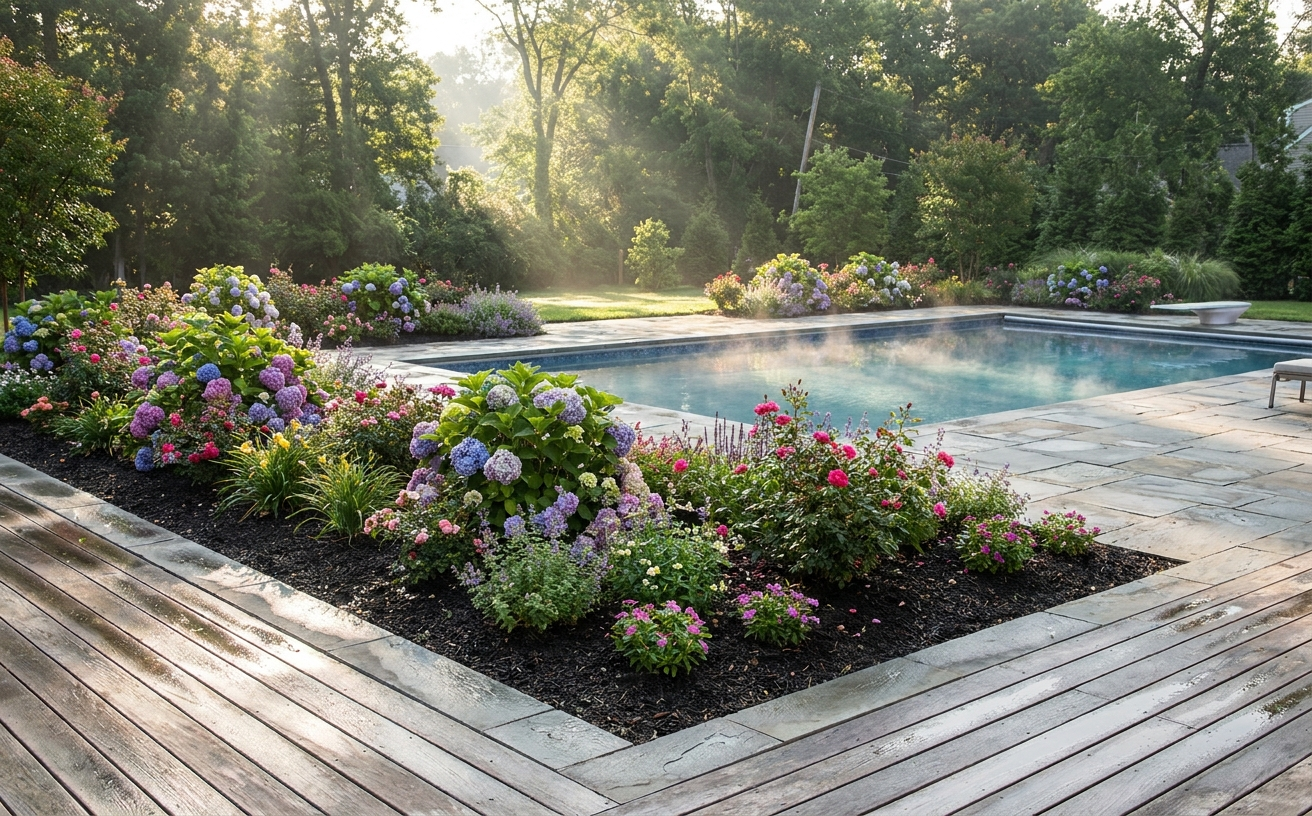
The garden beds around your pool look beautiful. The mulch retains moisture, the plants thrive in the humid microclimate, and the soft transition from lawn to deck to water creates a resort-like feel in your backyard. But that same landscaping is the reason your pool collects earthworms after every rain.
Most pool owners blame the rain itself, as if worms fall from the sky. The truth is more mundane and more fixable: your landscaping choices create a highway of moist surfaces that guide surfaced earthworms directly to your pool. Change the landscape, and you change the outcome.
Mulch: The Worm Superhighway
Organic mulch is a paradise for earthworms. Shredded hardwood, pine needles, and compost provide both food and shelter. A heavily mulched garden bed near the pool edge can support a dense earthworm population that stays underground during dry weather and surfaces in large numbers during rain.
When the worms surface, the mulched area stays wet longer than the surrounding surfaces, which means the worms linger there instead of returning underground quickly. From the mulch bed, it is a short crawl across the damp pool deck to the water’s edge.
This does not mean you should eliminate mulch entirely. But the distance between mulched areas and the pool edge matters enormously. A garden bed that touches the pool deck is a direct pipeline for worms. A bed separated by a dry zone of at least three feet of hardscape or gravel reduces the traffic significantly.
Lawn-to-Deck Transitions
The edge where your lawn meets the pool deck is a critical zone. Most installations have the grass growing right up to the concrete or paver edge, with no buffer. During rain, water runs off the lawn and pools along this edge, creating a strip of saturated ground that earthworms follow as they move across the surface.
This saturated strip becomes a travel corridor. Worms surface in the lawn, encounter the wet edge, and follow it toward the pool because the deck drains toward the water.
A simple fix is to install a mowing strip or paver border between the lawn and the deck. This creates a dry buffer that worms are reluctant to cross. The strip does not need to be wide. Six to eight inches of dry concrete or stone is enough to discourage most worm traffic.
Drainage Slope and Water Flow
How water moves across your yard during rain determines where worms go. If the ground slopes toward the pool, surface water carries worms along with it. If the deck drains toward the pool edge, the moisture trail leads worms straight to the water.
The ideal grading slopes all surfaces away from the pool. The lawn should slope away from the deck. The deck should slope toward drainage points that direct water away from the pool edge. This keeps the perimeter around the pool as dry as possible during and after rain, which makes it less attractive to surfacing worms.
If your yard grades toward the pool and regrading is not practical, a French drain along the pool-side edge of the lawn can intercept surface water before it reaches the deck. The drain collects the water and routes it away, keeping the deck perimeter dry even during heavy storms.
Plant Selection Near the Pool
The plants you choose for the area immediately around the pool affect worm populations indirectly. Heavy feeders that require frequent irrigation and rich soil amendments create the moist, nutrient-dense environment that earthworms prefer. Drought-tolerant plants in well-drained soil create the opposite.
- Succulents and ornamental grasses thrive in dry conditions and do not require the rich soil that attracts worms
- Lavender, rosemary, and other Mediterranean herbs prefer lean, well-drained soil that worms find inhospitable
- Container plants on the deck eliminate soil contact entirely and prevent worm migration from garden beds
You do not need to remove every moisture-loving plant from your yard. But the zone within three feet of the pool should prioritize plants that do not require constant watering or heavy mulching. For a detailed breakdown of which landscape changes make the biggest difference, iGarden’s worm-in-pool fix guide covers specific interventions by yard type and severity. This creates a dry buffer that worms will not cross even during active surface movement.
Deck Materials and Surface Texture
The material your deck is made from affects how easily worms can travel across it. Smooth concrete becomes slick when wet, and worms slide across it easily toward the pool edge. Textured concrete or brushed finishes provide more traction but also more surface area for moisture, which can attract worms.
Paver decks with joints filled with polymeric sand are less hospitable to worms than solid concrete because the sand creates a dry, abrasive surface. Wooden decks with gaps between the boards allow water to drain through quickly, keeping the surface drier than concrete after rain stops.
If you are planning a new deck or resurfacing an existing one, consider how the material performs during and after rain. The faster the surface dries, the less appealing it is as a travel route for surfaced worms.
The Complete Prevention Strategy
No single change will eliminate worms entirely. But combining several approaches creates a cumulative effect that dramatically reduces the number of worms that reach your pool after rain.
- Maintain a dry buffer zone of at least three feet between mulched garden beds and the pool deck
- Install a paver or mowing strip between the lawn and the deck to interrupt worm travel corridors
- Ensure the deck and surrounding ground slope away from the pool to prevent moisture accumulation at the pool edge
- Choose drought-tolerant plants for the immediate pool perimeter
- Use a pool cover during heavy rain if the forecast calls for sustained downpours
Together, these measures address the root cause rather than just the symptom. Worms end up in your pool because the landscape around it makes the journey easy. Make the journey difficult, and most worms will stay in the lawn where they belong.
Your landscaping does not have to suffer to protect your pool. The changes are subtle shifts in placement, material, and drainage that preserve the aesthetic while removing the pathways that turn a healthy garden into a worm delivery system.
