

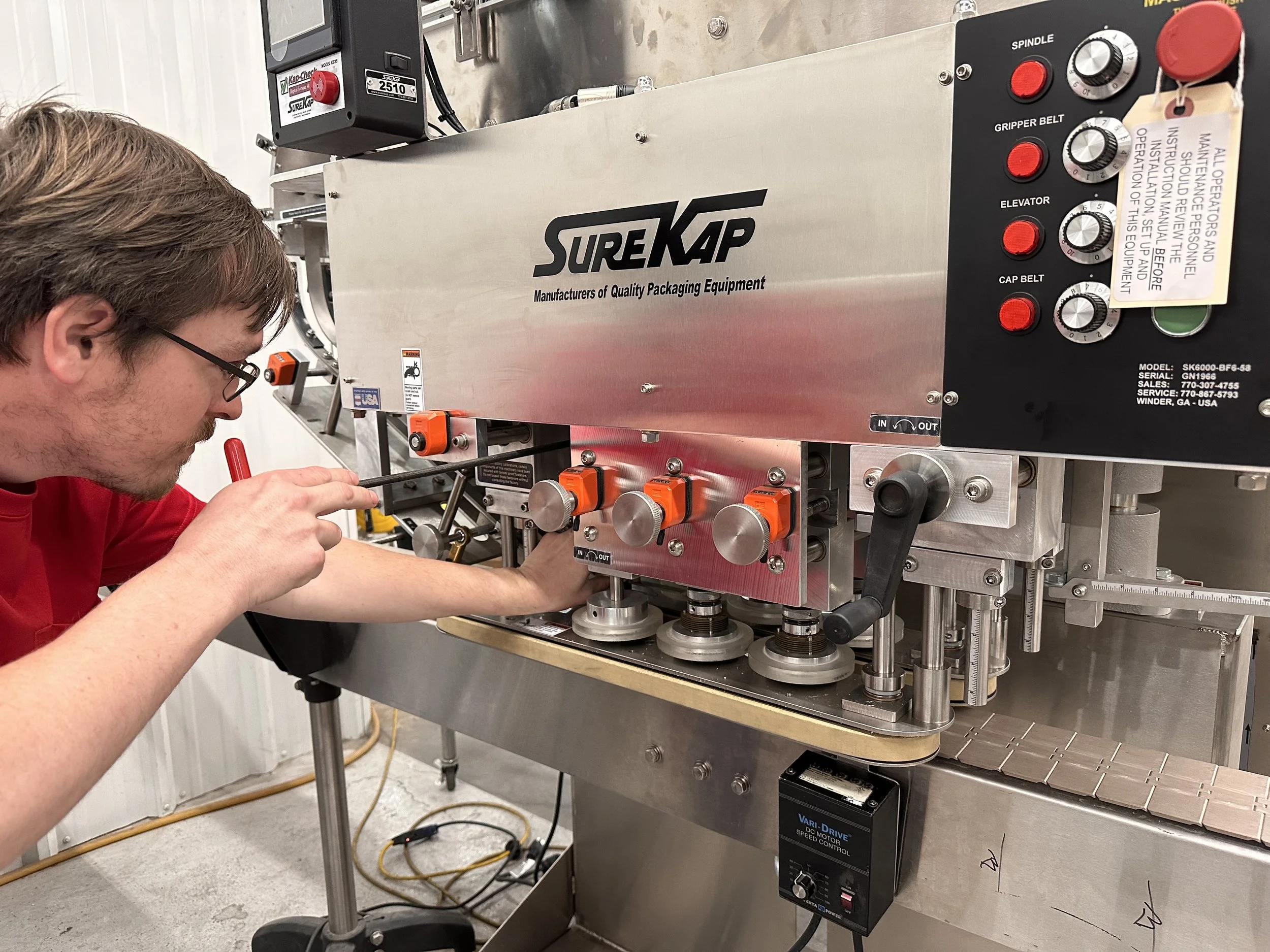
In modern packaging and manufacturing industries, consistency, speed, and accuracy are essential for maintaining product quality and meeting large-scale production demands. One of the key innovations supporting these requirements is the spray bottle capping machine. This advanced equipment is widely used in industries such as pharmaceuticals, cosmetics, household chemicals, and personal care products where spray bottles are a common packaging format.
What is an Automatic Spray Bottle Capping Machine?
An Automatic Spray Bottle Capping Machine is a specialized packaging system designed to automatically place and tighten spray caps onto bottles. These caps are typically used for products such as perfumes, disinfectants, air fresheners, hair sprays, and cleaning solutions.
The machine ensures that each spray pump or cap is correctly aligned, securely fastened, and uniformly sealed without damaging the bottle or dispensing mechanism. Unlike manual capping, this automated system improves efficiency, reduces labor costs, and eliminates inconsistencies caused by human error.
Working Principle of the Machine
The machine operates through a synchronized automated process involving multiple stages. Bottles are first transported via a conveyor system to the capping station. Depending on the machine design, a star wheel or indexing system positions each bottle precisely under the capping head.
The spray caps are then fed through an automatic sorting system such as a vibratory bowl feeder or cap elevator. Once positioned, the machine picks up each cap and places it accurately onto the bottle neck.
After placement, the spray bottle capping machine head applies controlled torque to tighten the spray pump or cap. This ensures a secure seal without over-tightening, which could damage the bottle or affect spray functionality. The finished bottles are then released onto an output conveyor for further packaging or labeling.
Key Features of Automatic Spray Bottle Capping Machines
Modern machines come equipped with advanced features that enhance performance, precision, and usability:
- High-Speed Operation
These machines can cap hundreds or even thousands of bottles per hour, depending on model specifications. - Precise Torque Control
Adjustable torque settings ensure consistent sealing pressure for different cap types and bottle materials. - Automatic Cap Feeding System
A cap elevator or vibratory feeder ensures continuous supply of caps without manual intervention. - Touch Screen Interface
Operators can easily control speed, torque, and machine settings using a digital control panel. - Stainless Steel Construction
Food-grade stainless steel ensures durability, corrosion resistance, and compliance with hygiene standards. - No Bottle–No Cap Sensor System
The machine automatically stops or skips capping if a bottle is missing, preventing wastage and errors. - Flexible Compatibility
It supports various bottle sizes, shapes, and spray cap designs with minimal adjustment.
Applications in Different Industries
Automatic spray bottle capping machines are widely used across multiple sectors due to their versatility and efficiency:
- Cosmetics Industry: Used for perfume sprays, hair sprays, facial mists, and deodorants.
- Pharmaceutical Industry: Ideal for nasal sprays, disinfectants, antiseptic sprays, and medicinal solutions.
- Household Products: Common in packaging air fresheners, cleaning sprays, and insect repellents.
- Industrial Chemicals: Used for lubricants, solvents, and surface treatment sprays.
Each application requires a high level of sealing precision to ensure product safety, leak prevention, and usability.
Advantages of Using the Machine
The adoption of automatic spray bottle capping machines offers several important benefits:
- Improved Efficiency: Automates a previously manual process, significantly increasing production speed.
- Consistent Quality: Ensures every bottle is sealed with the same pressure and alignment.
- Reduced Labor Costs: Minimizes the need for manual workers in the capping process.
- Leak Prevention: Proper torque control ensures airtight and leak-proof sealing.
- Enhanced Productivity: Continuous operation supports large-scale manufacturing demands.
These advantages make the machine essential for modern production lines aiming for high output and low error rates.
Technological Enhancements
Recent advancements in automation technology have greatly improved the performance of spray bottle capping machines. Servo motor-driven systems now provide more accurate torque control and smoother operation. PLC (Programmable Logic Controller) systems allow precise synchronization of conveyor movement, cap feeding, and capping action.
Some modern machines also include smart sensors and IoT connectivity, enabling real-time monitoring, predictive maintenance, and remote diagnostics. This reduces downtime and improves overall production efficiency.
Types of Spray Bottle Capping Machines
There are different types of machines available based on production needs:
- Fully Automatic Machines: Designed for large-scale industries with continuous production lines.
- Semi-Automatic Machines: Require partial manual assistance and are suitable for small to medium businesses.
- Inline Capping Machines: Integrated into conveyor systems for smooth and continuous operation.
- Rotary Capping Machines: Use rotating platforms for high-speed production environments.
Each type is selected based on production volume, budget, and packaging requirements.
Maintenance and Operational Care
Proper maintenance ensures long-term performance and reliability. Regular cleaning of cap feeding systems, lubrication of moving parts, and inspection of torque settings are essential. Operators should also ensure that sensors and control systems are functioning correctly.
Training operators is equally important, as modern machines require basic technical understanding for setup, calibration, and troubleshooting.
Conclusion
The Automatic Spray Bottle Capping Machine plays a vital role in modern packaging industries by ensuring fast, accurate, and reliable sealing of spray bottles. Its ability to deliver consistent torque, high-speed operation, and leak-proof results makes it indispensable for industries such as cosmetics, pharmaceuticals, and household chemicals.
As automation continues to advance, these machines are becoming smarter, more efficient, and more adaptable to different packaging needs. Businesses that invest in this technology benefit from improved productivity, reduced operational costs, and enhanced product quality—ultimately gaining a strong competitive advantage in the global market.
