

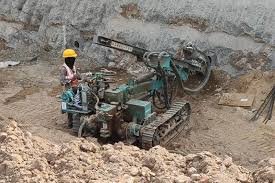
Rock anchoring contractors play a critical role in modern civil engineering, geotechnical construction, and infrastructure development. Their primary responsibility is to stabilize rock masses, rock anchoring contractors, and structural foundations using specialized anchoring systems designed to prevent movement, collapse, or erosion. These contractors are essential in projects where natural rock formations or excavated slopes pose safety risks or structural instability.
What Is Rock Anchoring?
Rock anchoring is a geotechnical technique used to reinforce unstable rock or soil formations by inserting high-strength steel bars, cables, or tendons into drilled holes within the rock mass. These anchors are then grouted or mechanically fixed to create a strong bond between the rock and the anchor system. Once tensioned, the anchors transfer load from unstable surface layers to deeper, more stable rock strata.
Rock anchoring contractors are specialized professionals who design, install, and test these systems according to engineering specifications.
Role of Rock Anchoring Contractors
Rock anchoring contractors are responsible for executing stabilization solutions in challenging geological environments. Their work typically includes: rock anchoring contractors
- Site investigation and assessment of rock stability
- Drilling boreholes into rock formations
- Installing steel rock bolts, cables, or tendon anchors
- Grouting to secure anchors in place
- Tensioning anchors to required load levels
- Conducting load testing and quality assurance
These contractors often collaborate with geotechnical engineers, structural engineers, and construction firms to ensure safety and compliance with project standards.
Applications of Rock Anchoring
Rock anchoring is widely used in various industries and infrastructure projects. Common applications include:
1. Slope Stabilization
Rock anchoring is frequently used in highways, railways, and hillside developments where slopes are prone to landslides or rockfalls. Anchors secure loose rock layers and prevent collapse.
2. Tunnel Construction
During tunneling, especially in mountainous regions, anchors are installed to stabilize tunnel walls and prevent rock bursts or collapses.
3. Retaining Structures
Rock anchors support retaining walls, bridge abutments, and deep excavation sites by providing additional lateral resistance.
4. Dam and Hydropower Projects
Large dams often require anchoring systems to stabilize abutments and foundation rock, ensuring structural integrity under water pressure.
5. Mining Operations
In underground mining, rock anchors are used to support mine roofs and reduce the risk of cave-ins.
Types of Rock Anchors
Rock anchoring contractors use several types of anchoring systems depending on site conditions:
- Passive anchors (rock bolts): Installed without initial tension; they activate when rock movement occurs.
- Prestressed anchors: Tensioned before or after grouting to apply active force.
- Cable anchors: High-capacity systems used for deep or heavy-load applications.
- Self-drilling anchors: Combine drilling and anchoring in one step, ideal for unstable ground.
Each type is selected based on load requirements, rock quality, and project design.
Equipment and Techniques
Rock anchoring contractors use advanced machinery and tools, including:
- Hydraulic drilling rigs for borehole creation
- Grouting pumps for cement injection
- Tensioning jacks for applying load to anchors
- Grout mixers and pumps for proper bonding material preparation
- Monitoring devices for load testing and displacement measurement
Modern techniques also include corrosion protection systems, such as epoxy-coated or galvanized anchors, to extend service life.
Installation Process
The installation of rock anchors follows a structured sequence:
- Drilling: Boreholes are drilled into the rock at specific angles and depths.
- Cleaning: Holes are cleared of debris and dust to ensure proper bonding.
- Anchor Insertion: Steel bars or cables are inserted into the boreholes.
- Grouting: Cement grout is injected to fill voids and secure the anchor.
- Tensioning: Once the grout hardens, anchors are tensioned using hydraulic jacks.
- Testing: Load tests confirm that anchors meet design requirements.
Precision and quality control are essential at every stage to ensure structural safety.
Safety Considerations
Rock anchoring is a high-risk activity, often performed on steep slopes, underground sites, or unstable rock faces. Contractors must follow strict safety protocols, including:
- Use of personal protective equipment (PPE)
- Stabilization of working platforms
- Monitoring for rock movement during drilling
- Proper handling of high-tension equipment
- Emergency response planning
Safety training and compliance with engineering standards are critical to preventing accidents.
Challenges in Rock Anchoring Projects
Rock anchoring contractors often face several challenges:
- Unpredictable geology: Rock conditions may vary significantly within short distances.
- Access limitations: Steep or remote sites complicate equipment transport.
- Water infiltration: Groundwater can weaken drilling and grouting processes.
- Corrosion risks: Long-term exposure to moisture can degrade anchors.
- Design complexity: Each project requires customized engineering solutions.
Experienced contractors rely on advanced surveying and geotechnical analysis to overcome these issues.
Importance in Modern Infrastructure
Rock anchoring is essential for safe and sustainable infrastructure development. Without proper anchoring systems, roads, tunnels, and buildings in mountainous or rocky regions would face significant risks of collapse or failure. Rock anchoring contractors ensure that infrastructure projects remain stable, durable, and safe for long-term use.
Their work not only protects human life but also reduces maintenance costs and extends the lifespan of critical structures.
Conclusion
Rock anchoring contractors are specialized professionals who provide vital stabilization services in geotechnical and construction engineering. Through precise drilling, anchoring, grouting, and tensioning techniques, they ensure the safety and reliability of structures built on or within rock formations. As infrastructure development continues to expand into challenging terrains, the demand for skilled rock anchoring contractors will remain strong, making their expertise indispensable in modern construction projects.
