


If you’ve searched for 111.90.150, you are likely investigating a network entry, suspicious server log activity, or trying to understand whether this numeric string represents a valid IP address. Numeric keywords like this often appear in hosting dashboards, firewall logs, website analytics, or cybersecurity reports.
In this fully SEO-optimized guide, we will explain what 111.90.150 means, whether it is a valid IP address, how IPv4 addressing works, potential security implications, lookup methods, and how to protect your systems. The article is structured according to Rank Math SEO guidelines with natural keyword placement and optimized headings.
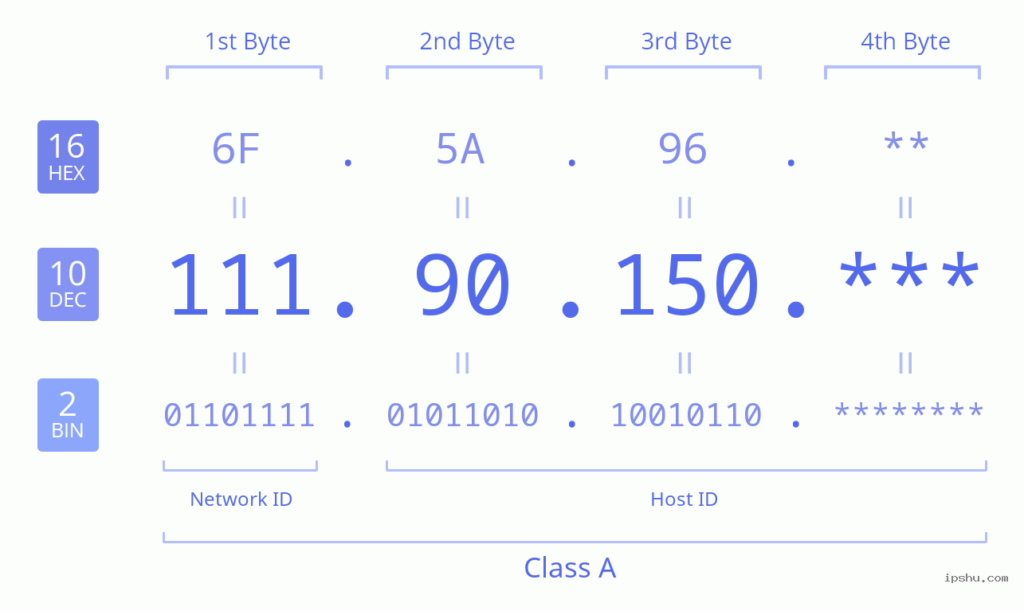
What Is 111.90.150?
At first glance, 111.90.150 appears to be part of an IPv4 address. However, a complete IPv4 address must contain four octets, separated by periods, such as:
111.90.150.25
Since 111.90.150 contains only three segments, it is not a complete IP address. It likely represents:
- A partial IP address
- A subnet range
- A log entry truncation
- A network block reference
Understanding this distinction is important before drawing any conclusions.
Understanding IPv4 Structure Behind 111.90.150
To understand 111.90.150, we must review how IPv4 addresses work.
IPv4 addresses:
- Contain 32 bits
- Are divided into four octets
- Each octet ranges from 0 to 255
Example of valid IPv4:
- 111.90.150.1
- 111.90.150.200
Global IP allocation is coordinated by Internet Assigned Numbers Authority, which ensures structured and regional distribution.
Is 111.90.150 a Valid IP Address?
Technically, 111.90.150 alone is incomplete. However:
- It may represent a subnet (111.90.150.0/24)
- It could refer to a Class C network block
- It might be shorthand for a full address range
Without the fourth octet, it cannot uniquely identify a specific device.
111.90.150 as a Subnet Range
In networking, administrators often reference only the first three octets to describe a subnet.
For example:
111.90.150.0/24
This means the address range includes:
111.90.150.0 – 111.90.150.255
If you encountered 111.90.150 in logs, it may indicate traffic from this entire subnet rather than a single IP.
Why You Might See 111.90.150 in Server Logs
There are several reasons:
1. Analytics Aggregation
Some tools summarize traffic by subnet.
2. Firewall Filtering
Security systems may group suspicious activity by network range.
3. Hosting Infrastructure
Cloud providers often assign IP blocks to data centers.
4. Truncated Log Entries
Export errors sometimes remove the final octet.
Before assuming malicious activity, verify the full IP.
How to Perform a Lookup for 111.90.150
Since 111.90.150 is incomplete, you must identify the full address before performing a lookup.
Once identified:
- Use WHOIS lookup tools
- Check ASN details
- Verify geolocation
- Review blacklist databases
This can reveal:
- Internet Service Provider
- Hosting company
- Approximate region
- Abuse contact information
111.90.10 and Public vs Private IP Addresses
Private IP ranges include:
Since 111.90.0 does not fall within private ranges, it likely belongs to a public IP allocation.
Public IP addresses are globally routable and visible on the internet.
Security Considerations for 111.0.150
An IP range is not inherently dangerous. Risk depends on behavior patterns.
Investigate if you notice:
- Repeated failed login attempts
- Brute-force patterns
- DDoS traffic spikes
- Spam submissions
- Unusual API requests
Single entries usually indicate normal web traffic.
111.90.10 in Cybersecurity Monitoring
Modern security tools track IP reputation and behavior patterns.
Monitoring focuses on:
- Request frequency
- HTTP status codes
- User-agent consistency
- Time-based attack patterns
If multiple IPs within the 111.90.10 subnet trigger alerts, you may consider rate limiting.
How to Block Traffic from 111.0.150
If malicious behavior is confirmed, you can block an entire subnet.
Apache (.htaccess)
NGINX
Cloud Firewall
Add subnet block rule.
Always confirm activity before blocking to avoid false positives.
Can You Trace 111.90.10 to a Person?
No. An IP address traces to:
- ISP
- Hosting provider
- Organization
It does not directly reveal:
- Personal identity
- Exact home address
- Phone number
Only law enforcement can request subscriber details through legal processes.
IPv4 Exhaustion and Subnet Management
IPv4 address space is limited. Due to global demand:
- IP blocks are reused
- Subnets are reassigned
- Hosting providers rotate allocations
This means activity from 111.90.10 today may not reflect the same user tomorrow.
Common Misconceptions About 111.0.150
Myth 1: Every Unknown IP Is a Hacker
False. The internet constantly exchanges data between servers.
Myth 2: IP Address Reveals Identity
False. It reveals network ownership only.
Myth 3: Blocking Immediately Improves Security
Not always. Overblocking can disrupt legitimate users.
SEO Insight: Why 111.0.150 Keywords Rank
Numeric IP keywords often:
- Have low competition
- Show high user intent
- Attract cybersecurity researchers
- Drive technical traffic
Optimizing such keywords requires:
- Natural density
- Clear technical explanation
- Structured formatting
- FAQ inclusion
Best Practices When Investigating 111.90.50
- Verify the full IP address
- Check frequency of activity
- Cross-check blacklist databases
- Monitor for pattern repetition
- Avoid overreaction
Data-driven decisions improve network stability.
Frequently Asked Questions About 111.90.10
Is 111.90.50 a complete IP?
No, it lacks the fourth octet.
Can 111.90.10 be malicious?
Only if associated with confirmed harmful behavior.
Should I block 111.90.10?
Block only after verifying repeated suspicious activity.
Why does it appear in logs?
Likely subnet grouping or truncated entry.
Final Thoughts on 111.90.50
The term 111.90.10 represents either a partial IPv4 address or a subnet reference. By itself, it is not harmful. Context determines whether action is required.
