

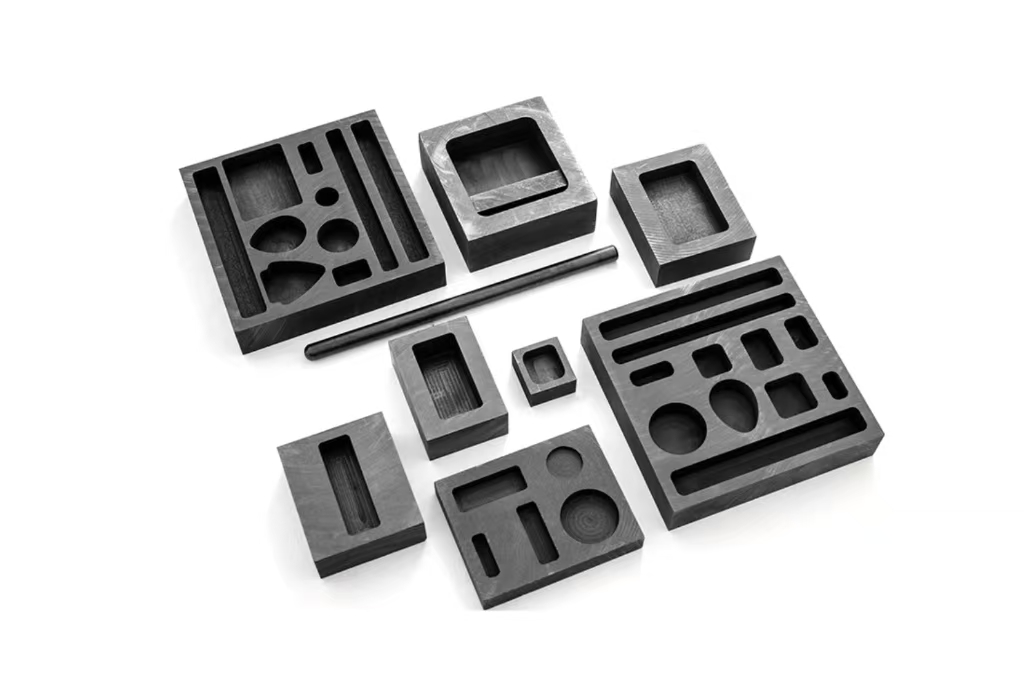
Graphite molds play an important role in many industrial manufacturing processes. They are widely used for metal casting, glass production, semiconductor manufacturing, continuous casting, and other high-temperature applications. Choosing the right graphite mold supplier can directly affect product quality, production efficiency, and operating costs.
A reliable supplier does more than simply provide a graphite mold. The best suppliers understand material properties, machining requirements, thermal performance, and the specific needs of each application. Whether a company needs standard molds or fully customized solutions, selecting an experienced graphite mold supplier is an important step toward achieving consistent manufacturing results.
What Is a Graphite Mold?
A graphite mold is a specially designed mold made from graphite material. It is used to shape molten or heated materials into specific forms. Graphite is popular because it can handle extremely high temperatures while maintaining good dimensional stability.
Unlike many traditional mold materials, graphite has excellent thermal conductivity. This means heat can move through the material quickly and evenly. As a result, manufacturers can achieve better temperature control during production.
Graphite also has natural lubricating properties. In many applications, this can reduce the need for additional release agents. These properties make graphite molds useful for industries that require precision, durability, and resistance to thermal stress.
Why Choosing the Right Graphite Mold Supplier Matters
Not every graphite mold supplier offers the same level of quality or technical support. A poorly designed mold can create production problems, material waste, and inconsistent product dimensions.
A professional supplier understands that each manufacturing process has different requirements. Factors such as operating temperature, pressure, mold geometry, material compatibility, and production volume must all be considered.
The right supplier can help businesses select the proper graphite grade and create a mold that matches the application. This technical knowledge can improve mold life and reduce unnecessary replacement costs.
Working with an experienced supplier also helps ensure consistent material quality. Reliable quality control is especially important for industries where even small dimensional changes can affect the final product.
Important Properties of Graphite Molds
Graphite offers several useful properties that make it suitable for demanding industrial applications. One of the most important benefits is its ability to perform at high temperatures.
Graphite generally maintains its structure under conditions where many other materials may weaken or deform. It also provides excellent thermal conductivity, allowing heat to spread efficiently throughout the mold.
Other important properties include:
- High temperature resistance
- Good thermal conductivity
- Low thermal expansion
- Natural lubricating characteristics
- Good machinability
- Resistance to thermal shock
- Lightweight compared with many metal materials
These characteristics allow manufacturers to create complex and precise mold designs. A knowledgeable graphite mold supplier can recommend the right material grade based on the specific operating environment.
Applications of Graphite Molds
Graphite molds are used across a wide range of industries. Their ability to handle heat and provide precise shapes makes them suitable for many manufacturing processes.
One common application is metal casting. Graphite molds can be used for casting metals and alloys into rods, bars, rings, tubes, and other components. They are also used in continuous casting processes.
The glass industry may use graphite tooling for shaping and handling high-temperature glass materials. Semiconductor and electronics industries also use graphite components because of their thermal and electrical properties.
Other applications may include jewelry production, precious metal casting, laboratory equipment, and specialized industrial manufacturing. The exact mold design depends on the product being produced.
Custom Graphite Mold Manufacturing
Many companies require molds with specific dimensions and complex shapes. In these situations, custom manufacturing becomes essential.
A professional graphite mold supplier should be able to work with technical drawings, samples, or production requirements. Modern machining equipment can create detailed cavities, channels, holes, and surface features.
Custom molds can be designed for a particular production line or manufacturing process. This helps improve accuracy and reduce the need for additional machining after casting.
Before production begins, important details should be reviewed carefully. These may include dimensions, tolerances, material grade, surface finish, and operating conditions.
Good communication between the customer and supplier is essential. A detailed design process can prevent costly mistakes and ensure the finished graphite mold performs as expected.
How to Evaluate a Graphite Mold Supplier
Choosing a supplier should involve more than comparing prices. A low-cost mold may become expensive if it has a short service life or creates production problems.
Start by examining the supplier’s experience. Companies with knowledge of graphite materials and industrial applications are often better prepared to provide technical recommendations.
You should also consider the supplier’s manufacturing capabilities. Advanced CNC machining equipment can improve precision and repeatability.
Quality control is another important factor. Reliable suppliers should inspect raw materials and finished products to ensure they meet required specifications.
Customer support also matters. A good graphite mold supplier should be available to answer technical questions and help solve manufacturing challenges.
Understanding Different Graphite Grades
Graphite is available in different grades, and each grade has unique characteristics. Density, grain size, strength, porosity, and thermal conductivity can vary.
Fine-grain graphite may be suitable for applications requiring detailed machining and smooth surfaces. Larger-grain materials may be appropriate for other industrial uses where different performance characteristics are needed.
The correct grade depends on the application. High temperatures, mechanical loads, chemical exposure, and production cycles can all influence material selection.
An experienced supplier can analyze these requirements and recommend a suitable graphite material. Choosing the wrong grade may lead to cracking, excessive wear, or poor product quality.
For this reason, businesses should discuss their complete operating conditions with the supplier before ordering a mold.
Quality Control in Graphite Mold Production
Quality control helps ensure that every graphite mold meets the required specifications. The process may begin with selecting suitable raw graphite materials.
During manufacturing, precision machining is important for maintaining accurate dimensions. CNC equipment can produce complex shapes with consistent tolerances.
Finished molds may be inspected for dimensions, surface quality, cracks, and other defects. Depending on the application, additional testing may also be required.
A reliable graphite mold supplier should have a clear quality management process. Consistent inspection can help customers receive products that perform reliably in their manufacturing environment.
Good quality control also reduces the risk of unexpected production interruptions caused by defective molds.
Factors That Affect Graphite Mold Performance
Several factors can influence how long a graphite mold lasts. Operating temperature is one of the most important. Extremely high temperatures can place significant stress on the material.
Rapid heating and cooling may also affect mold life. Although graphite has good thermal shock resistance, proper process control is still important.
Mechanical handling can create damage as well. Improper installation or excessive force may cause cracks or chips.
The material being processed can also influence performance. Different metals, chemicals, and production environments may interact differently with the graphite surface.
A qualified graphite mold supplier can provide guidance on proper use and maintenance. Following recommended operating procedures can help extend the service life of the mold.
Benefits of Working with an Experienced Supplier
An experienced supplier can provide more than a finished product. They can offer technical knowledge that helps customers improve their manufacturing process.
For example, a supplier may recommend design changes that improve heat transfer or make the mold easier to manufacture. They may also suggest a different graphite grade for better durability.
Custom engineering support can be especially valuable for businesses producing complex components. Instead of using a standard solution, manufacturers can receive molds designed around their exact requirements.
A long-term relationship with a dependable graphite mold supplier can also improve supply consistency. This is important for companies that need regular replacement molds or large production quantities.
Cost Considerations When Buying Graphite Molds
Price is an important consideration, but it should not be the only factor. The cheapest mold may not always provide the best long-term value.
Businesses should consider total operating costs. A high-quality graphite mold may last longer and reduce production downtime. Better dimensional accuracy can also reduce material waste.
Customization, material grade, size, complexity, and machining requirements can all affect the final price.
It is often helpful to compare several suppliers based on quality, technical support, delivery capability, and overall value. A detailed quotation can help buyers understand exactly what is included in the order.
The goal should be to find a graphite mold supplier that provides a strong balance between quality, performance, and cost.
Questions to Ask Before Choosing a Supplier
Before placing an order, customers should ask several important questions.
- What graphite grades are available?
- Can the supplier manufacture custom designs?
- What machining equipment is used?
- What quality control procedures are followed?
- Can the supplier meet required tolerances?
- What industries does the supplier serve?
- How long is the expected production time?
- Is technical support available after delivery?
These questions can help businesses compare potential suppliers and make a more informed decision.
The Future of Graphite Mold Manufacturing
Manufacturing technology continues to improve, and graphite mold production is also evolving. Advanced CNC machining, better design software, and improved graphite materials are helping manufacturers create more precise components.
Industries are increasingly demanding tighter tolerances and faster production cycles. As a result, suppliers must continue investing in modern equipment and technical expertise.
Custom solutions are also becoming more important. Businesses want molds designed specifically for their products and production systems.
A forward-thinking graphite mold supplier can help manufacturers adapt to these changing requirements and remain competitive.
Conclusion
Choosing the right graphite mold supplier is an important decision for companies that depend on high-temperature and precision manufacturing processes. Material quality, technical knowledge, machining capabilities, and customer support can all influence the success of a project.
A reliable supplier should understand the application and recommend the right graphite grade and mold design. They should also maintain strong quality control throughout the manufacturing process.
By focusing on experience, customization, quality, and long-term value, businesses can find a supplier that supports efficient and reliable production. Investing time in selecting the right graphite mold supplier can lead to better mold performance, reduced downtime, and improved manufacturing results.
